AI and the Art of Humor: A Laugh away from Being Human
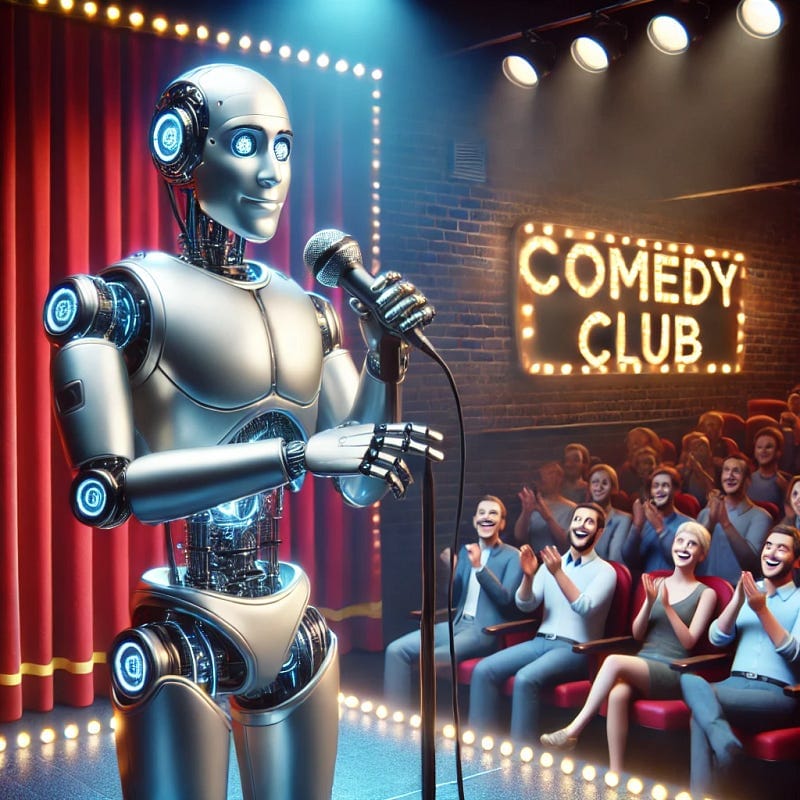
Humor is often described as one of the most uniquely human traits. It’s the secret sauce in awkward conversations, the glue in relationships, and the ultimate test for a truly advanced artificial intelligence. So, when AI starts cracking jokes or delivering punchlines that actually land, it’s worth asking: is this the beginning of the robot comedy takeover?
The Complex Code of Comedy
At first glance, humor seems almost impossible to replicate in AI. It’s a tapestry woven with cultural nuance, timing, and a dash of the absurd. It’s subjective and fluid; what makes one person laugh might leave another completely baffled. For humans, humor is intuitive. For AI, it’s a minefield of “what if I get this horribly wrong?” moments.
Yet, AI has made surprising progress. Thanks to natural language processing and machine learning, bots are learning the subtleties of sarcasm, wordplay, and even self-deprecation. Some chatbots have been programmed to respond with wit, creating interactions that feel oddly… human.
Take, for example, AI’s ability to understand and create puns — a linguistic gymnastics exercise that requires both knowledge and creativity. A chatbot quipping, “I’m reading a book on anti-gravity — it’s impossible to put down,” is arguably on par with many dad jokes.
Humor: A Path to Empathy
One of the reasons humor is so critical to human interaction is its ability to build rapport and foster empathy. Shared laughter creates bonds. When AI masters humor, it’s not just about entertainment; it’s about connection. Imagine an AI therapist that lightens a heavy session with a well-timed joke or a virtual assistant that can diffuse your Monday morning grumpiness with a bit of playful banter.
This potential for humor makes AI feel less like a cold, calculating machine and more like a trusted companion. It’s a fine line between functional and relatable, and humor is the balancing act that makes AI seem almost… alive.
The Risks of Robotic Humor
Of course, AI humor is not without its pitfalls. The comedic sensibilities of a machine can sometimes go awry. Humor is deeply tied to context, and without proper understanding, an AI’s attempt at comedy could veer into cringe-worthy or even offensive territory. A joke about cats might be universally safe, but what about a joke that misfires in a multicultural or sensitive context?
And then there’s the uncanny valley of humor. If an AI’s jokes are too good, it might unsettle us. After all, humor is one of the traits we cling to as uniquely human. When a bot delivers a flawless punchline, it forces us to confront the question: if it can make us laugh, what else can it do?
AI and the Future of Funny
As AI continues to blur the lines between man and machine, humor might be the final frontier. It’s a realm that requires not just intelligence, but creativity, intuition, and an understanding of human absurdities. From generating memes to participating in comedy skits, the potential applications are endless — and occasionally hilarious.
But perhaps the true power of AI humor lies in its ability to remind us what it means to be human. In teaching machines to laugh with us, we might just learn a little more about ourselves. And who knows? One day, you might find yourself in a comedy club, laughing at a set delivered by a bot that’s funnier than most humans. At that point, let’s hope they’re not also writing our obituaries — because you know they’d make a killer pun about it.
$ ls ./see-also/
$ ./buy-me-a-coffee ☕ // found this useful? I write these in my spare time